



No Nolan. No Spielberg. No Fincher. No Iñárritu. As American studios sit out the 79th Cannes Film Festival, European auteurs and hungry indie buyers are left to carry the Palais.
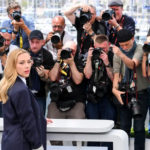
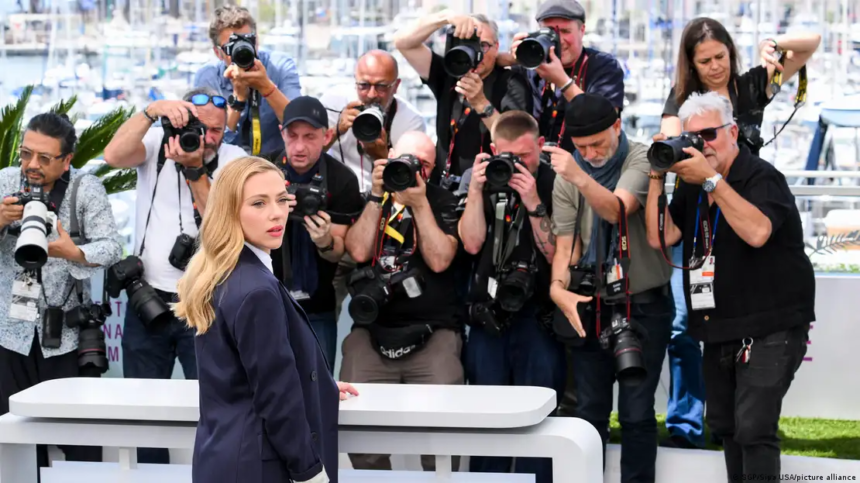
Picture the red carpet at Cannes 2026. The kind you’ve seen a thousand times. Stars ascending the steps of the Grand Palais in Dior and Armani, flashbulbs turning dusk into noon, the crowd pressed six-deep behind the barriers. Now subtract the Americans.
That’s Cannes 2026.

As the festival opens its 79th edition, the marquee films from Hollywood’s major studios are conspicuously absent. Christopher Nolan’s The Odyssey, Steven Spielberg’s Disclosure Day, Alejandro G. Iñárritu’s Digger, David Fincher’s Cliff Booth — all expected awards heavyweights, all staying home. The sizzle instead falls to international directors: Romanian master Cristian Mungiu with Fjord, Paweł Pawlikowski with Fatherland, Nicolas Winding Refn with Her Private Hell. The festival jury this year is led by Demi Moore.
The reasons for Hollywood’s absence are as old as the festival calendar and as new as post-COVID release strategy. Some films weren’t finished. Others were deemed too far out from their theatrical window to justify the cost of a Cannes launch — and those costs aren’t trivial. Flying talent to the Côte d’Azur, throwing parties at villas, managing French critics who can tank an American film’s awards hopes with a chorus of boos — it adds up, in every sense.
“Cannes is the premiere showcase of the year for foreign language film,” says veteran sales agent John Sloss of Cinetic Media. “It has always been challenging for American awards-related films because of where it falls in the calendar.”
But the studios, even absent from the red carpet, will still be very present in the Marché du Film. Cannes has always been two festivals simultaneously: the one you see on television, with the gowns and the Palme d’Or, and the parallel market happening in hotel suites and screening rooms along the Croisette, where distribution deals get done and the films of 2027 begin to take shape. On that front, there’s plenty of action.
This year’s market is buzzing with a mix of provocations: Jason Statham re-teaming with The Beekeeper director David Ayer on an action film called John Doe; Oscar winners Renée Zellweger and Sissy Spacek headlining a multigenerational saga called A Woman in the Sun; Jeremy Strong and The Girl With the Needle director Magnus von Horn collaborating on a World War II thriller titled The Passenger.
Whether buyers will spend is the real question. The box office is undeniably recovering — domestic grosses are up more than 20% year over year, powered by Michael and The Devil Wears Prada 2 — but the wealth isn’t trickling down evenly. Indie films with recognizable stars have been flatlining at alarming rates. Recent releases like Christy and Dead Man’s Wire, despite featuring Sydney Sweeney and Bill Skarsgård respectively, failed to crack $4 million globally.
“It’s become more binary,” says Kent Sanderson, CEO of Bleecker Street Media. “Either something really connects with audiences, or it doesn’t. The market overall is stronger than it was a year ago, but it’s driven by the films that work. And the films that don’t work, really don’t work.”
The audience itself is shifting in ways that are reshaping what sells. Younger viewers — the ones who’ve turned Marty Supreme, Longlegs, and Materialists into unlikely cultural touchstones — are replacing the older arthouse crowd that never fully returned after the pandemic. They’re hungry for genre, for A24 aesthetics, for films that hit social media in waves.
“Specialty film is getting much more genre-oriented because the audience is getting younger,” says Scott Shooman of Independent Film Company. “They don’t like a movie to be put in a box. They want something unique with a story that feels fresh.”
Neon, which has somehow won the Palme d’Or six consecutive times, arrives with nine films ranging from Ryusuke Hamaguchi’s All of a Sudden to James Gray’s Paper Tiger. “Whether we win the Palme or not, I feel quite confident that we have a slate of films this year that people are going to be really excited about,” says Jeff Deutchman, Neon’s president of acquisitions.
Not everyone is so confident. Row K, a distributor that launched last summer and spent heavily acquiring several films out of Toronto, is already facing reports of financial distress. With the Paramount-Warner Bros. merger pending and the ongoing ripple effects of Disney’s Fox acquisition, the pool of major buyers is shrinking.
“The commissions are fewer than they were a few years ago,” says Imagine Documentaries president Sara Bernstein. “It’s a condensed market.”
A condensed market, an absent Hollywood, and a hunger for something that actually works. That’s the Cannes 2026 the industry is heading into.