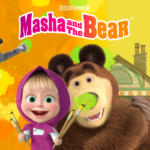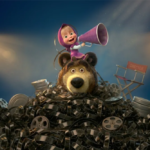




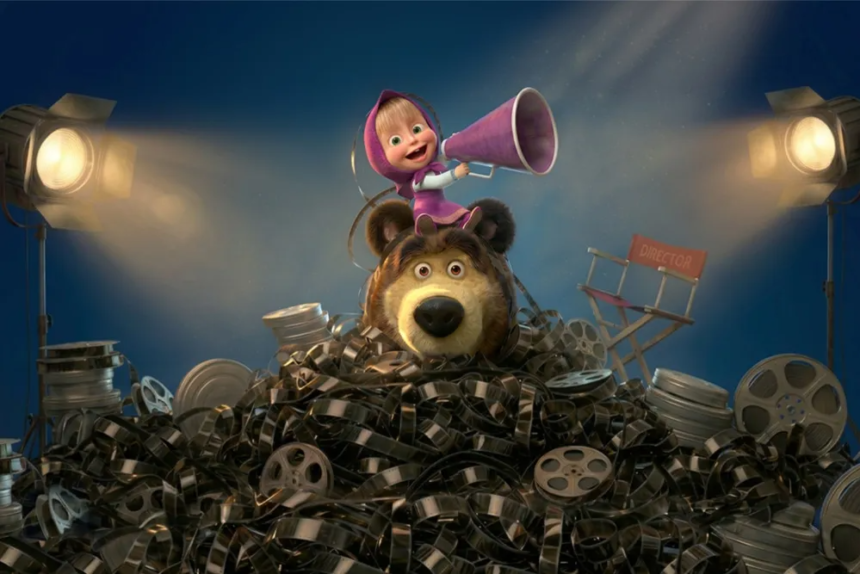
Masha and the Bear’ creator Oleg Kuzovkov just got his characters back. Now he’s building a feature film that starts over from scratch — and targeting a 2028 release that could shake up global animation.
Somewhere in the archive of human attention sits a seven-minute animated episode called Masha and the Bear: Recipe for Disaster. It has been watched 4.6 billion times on YouTube. That is not a typo. For context: there are approximately 8 billion people on Earth. This episode — in which a small, wild-haired Russian girl attempts to make porridge and catastrophically fails — has been seen by more than half of humanity. It remains the most-watched non-music video in the platform’s history.
So why has it taken this long to get a feature film?
The story behind Masha and the Bear is actually a story about creative control — specifically, who holds it and what happens when that changes. Oleg Kuzovkov, the show’s creator, founded Animaccord in 2008, assembling animators, composer Vasily Bogatirev, and sound engineer Boris Kutnevich (also the voice of the Bear) around a property he had invented. Over the years, the show became a global phenomenon — licensing, merchandise, theme parks, the YouTube behemoth. And somewhere in that growth, the relationship between creator and studio became complicated enough that Kuzovkov eventually found himself on the outside of something he’d built from scratch.
Now he’s back. Following the expiration of the license he’d granted to Animaccord, Kuzovkov has regained creative control of Masha and the Bear, established an independent animation company called Studio MiM — based in both Los Angeles and Moscow — and announced that the first original feature film based on the property is in production. Target release: 2028.
The film will be a clean break from the Animaccord series. New creative vision, same spirit. “The creative team will introduce global audiences to a rebooted vision of the characters as they explore new adventures in their unique kind-hearted comedy manner,” Studio MiM said in a statement.
Kuzovkov has been careful to frame this not as a corporate reclamation but as a creative one. “It’s an exciting creative challenge — one that I wholeheartedly embrace,” he said, “and my wonderfully creative and excited team is equally energized and eager to bring it to life with the same spirit, humor and heart that made the old series so beloved.”
The IP’s global reach makes this an unusual opportunity. Most animated properties that attempt the feature film jump do so with Disney or DreamWorks behind them. Kuzovkov is doing it independently, with a production pipeline he controls, out of a studio he built specifically for this purpose. Whether international distributors line up for a property that is enormous in some markets and entirely unknown in others is the central bet he’s making.
The 4.6 billion views suggest the audience is there. Getting them from their phones to a theater — that’s the film industry’s perpetual challenge, and it doesn’t get any easier just because your show broke YouTube.